
Of Camilla and Vortigern: The Shieldmaid and the Overlord
… This week, we're digging into the least likely of the ladies: King Arthur’s concubine, or mistress, or seductress: “the Saxon battle maiden, Camilla.”
So, we’re starting with a fun one!
At first glance, the name Camilla doesn't appear Saxon or Germanic or Jutish, which is probably what she was. Because it isn’t…
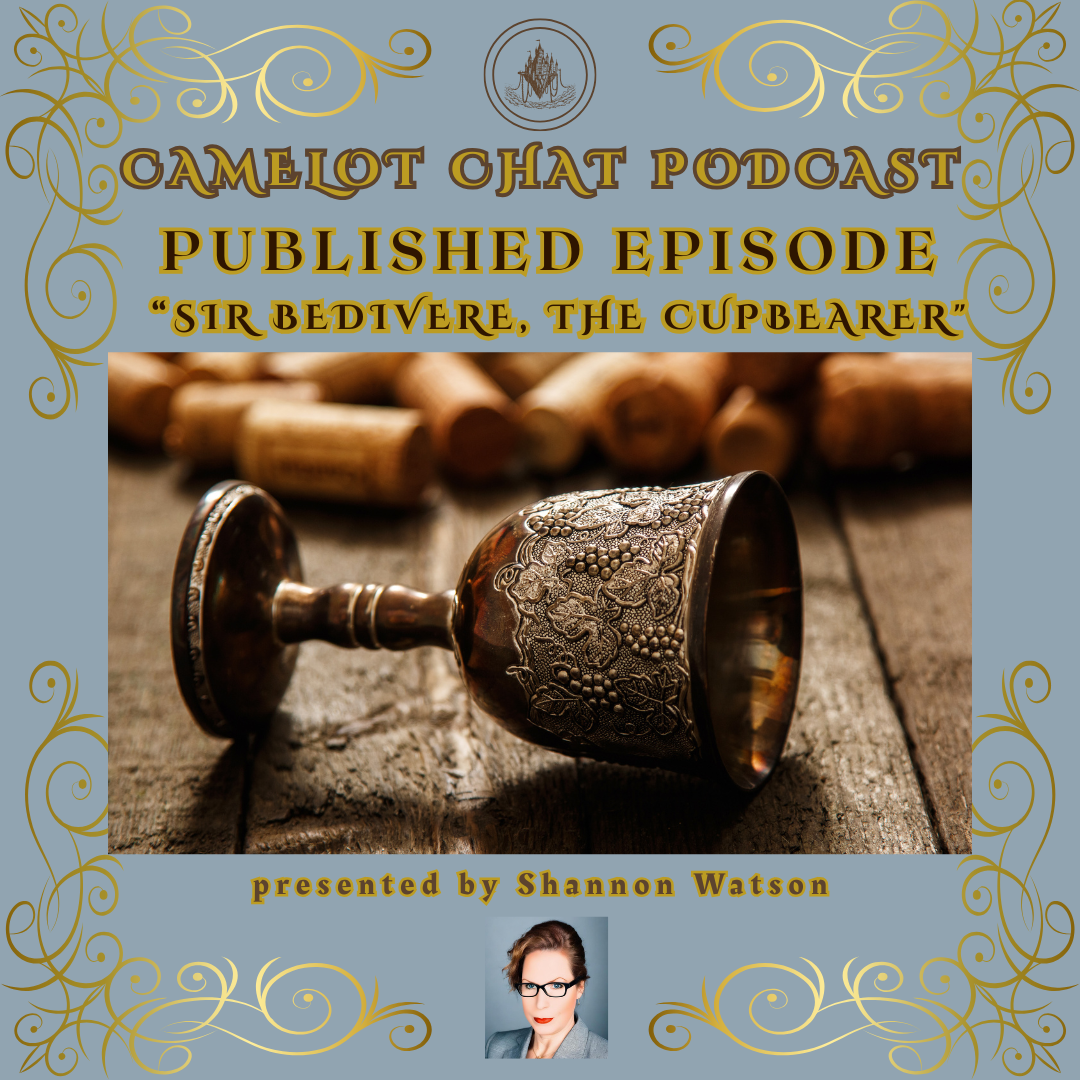
Sir Bedivere the Cupbearer
… Sir Bedivere was King Arthur’s cupbearer. Evidence of cupbearers serving at medieval courts survives from ancient times. They are there in the Old Testament, when Solomon met Sheba. They are there in the Iliad, pouring ambrosia into golden goblets for the gods on Mount Olympus. They were there in ancient Egypt, standing beside the Pharoah in a gold-glimmering throne room.
There is even a report, roughly contemporary with Arthur, of a “Count of the Cupbearers,” serving in Visigothic Spain. This meant there was literally a corps of cupbearers with a nobleman at their head, who served as Chief Cupbearer. The other cupbearers would have waited on the king's royal guests.
It is likely that this arrangement, with Bedivere as Chief Cupbearer, is what would have obtained in King Arthur’s court…

Guinevere: Not Such a Ninny After All
Hello, everyone, and welcome to Camelot Chat! I’m your hostess, Shannon Watson; and today, we will be continuing our discussion from last week about Queen Guinevere... except, this week, we will be talking about Guinevere’s secular totems and what they tell us about her function as queen.
Last week, we mentioned the Cult of the Severed Head, and how Guinevere rode about with the embalmed severed heads of her enemies swaying from the pommel of her saddle. So: either the queen or someone in her entourage was a headhunter: one of the ancient caste of warriors who took the heads of their enemies in battle and preserved them, thereby keeping their power…

Queen Guinevere: Medusa, Blood-letting, and the Cult of the Severed Head
Hello, everyone, and welcome to Camelot Chat! I’m your hostess, Shannon Watson, and today, we’ll be talking about Queen Guinevere... and whether queen was really her only title.
Many strange symbols and stories are associated with the queen known as Guinevere, Gwenhwyfar, Guanhumara... and even Wanders. George R.R. Martin, author of The Song of Ice and Fire series, calls these symbols sigils; and most of the great houses in his books, some of which were based on medieval chivalry, have them.
The people of Dark Age Britain had them, too, although the forms their sigils took were more primitive, being more on the line of totems than heraldry. For instance, instead of a picture of a running wolf on a flying pennant, one might see a feral-looking warrior wearing a wolf pelt. Or, a heavily-tattooed Pict of the Orcs, or Boar Clan, might use the tusk of a wild boar in lieu of a dagger…
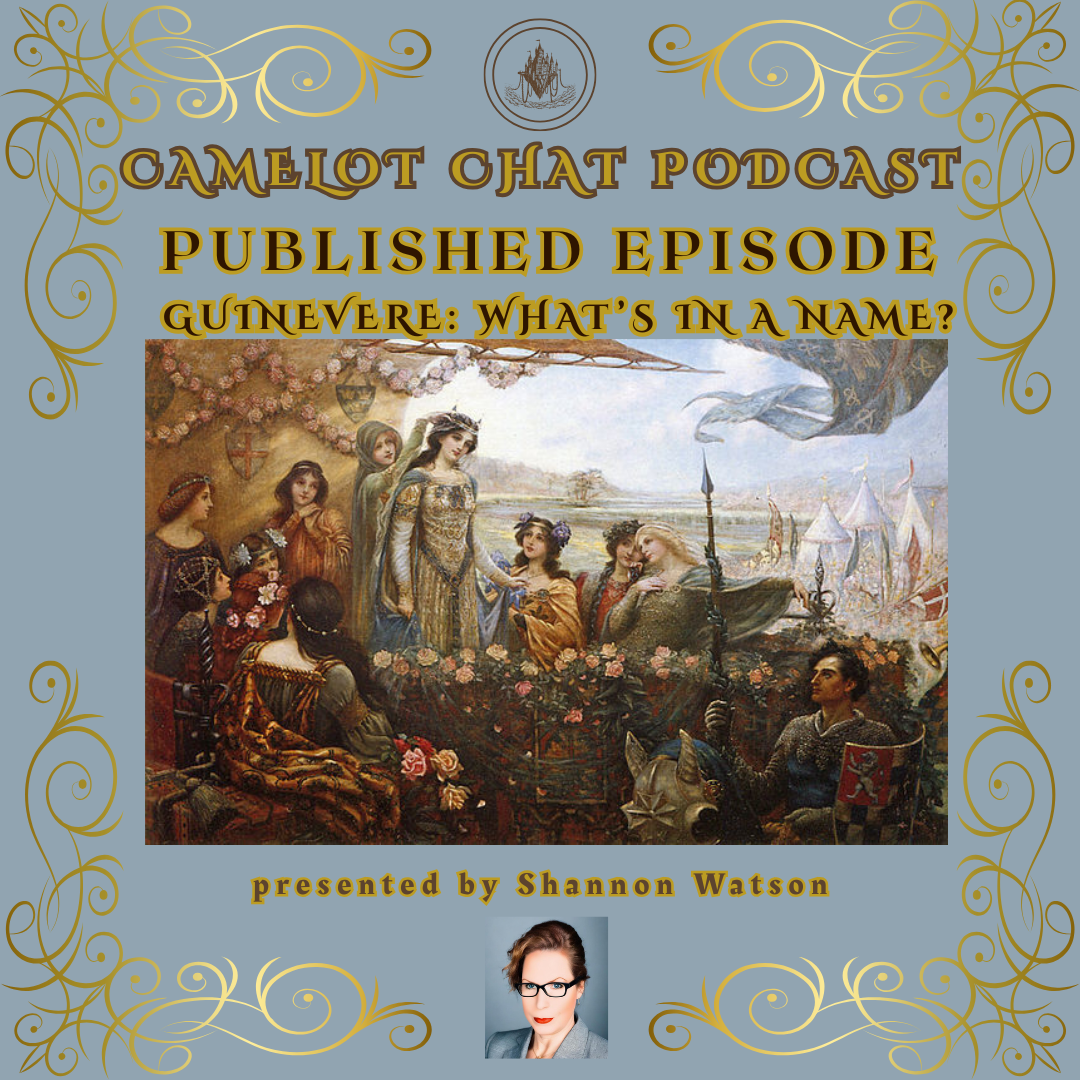
Guinevere: What's in a Name?
Hello, everyone, and welcome to Camelot Chat! I’m your hostess, Shannon Watson, and today, we’ll be talking about the many names–their translations, in what languages they originated, and what that all means–of the famous Queen Guinevere of Camelot.
Queen Guinevere had a lot of names. I mean a lot.
Let’s start with the obvious. Guinevere. What does it mean, and where does it come from? What was the original form? And was it even a name at all…?
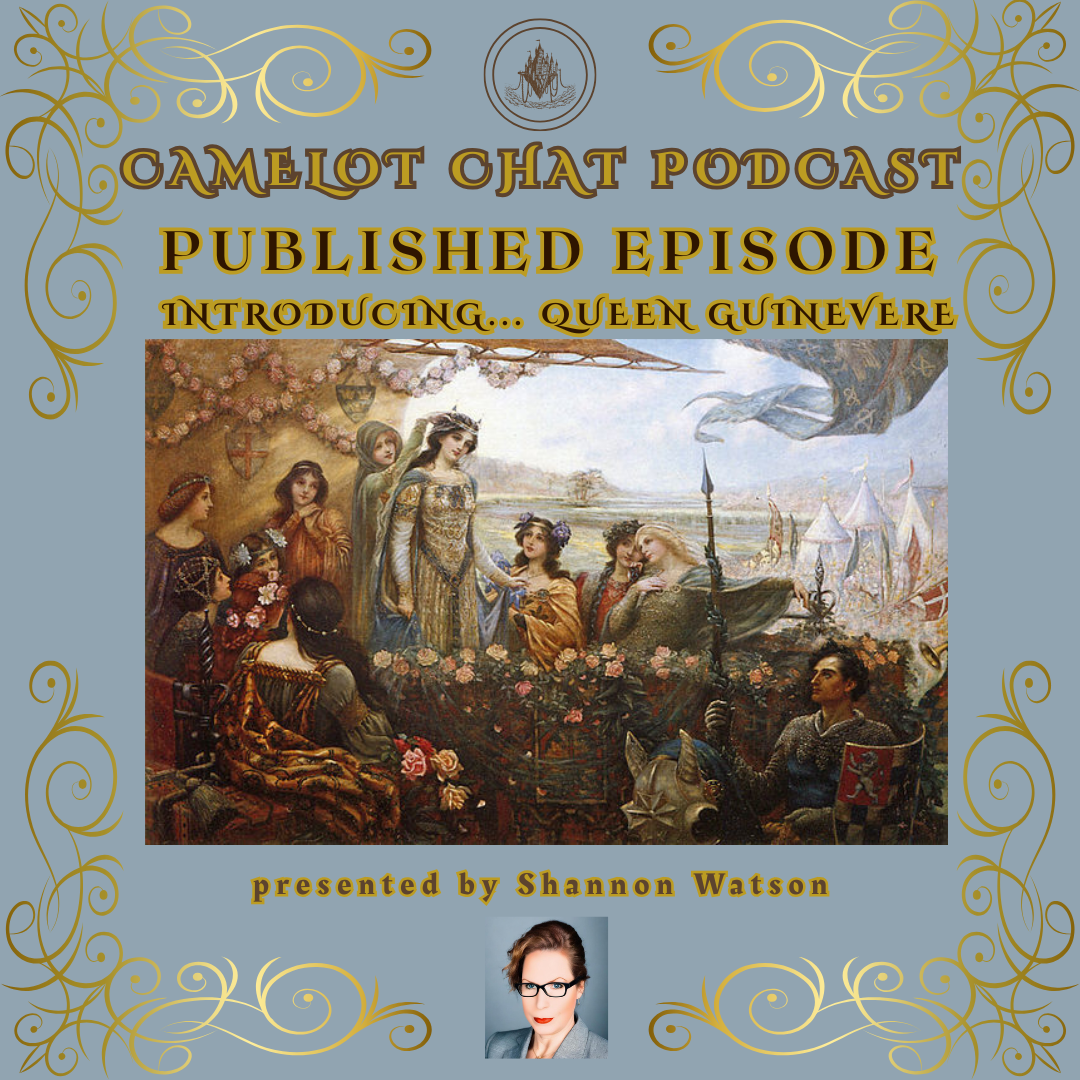
Introducing... Queen Guinevere
Hello, everyone, and welcome to the first-ever episode of my new weekly podcast, Camelot Chat! I’m your hostess, Shannon Watson, and today, we’ll be talking about the early origins of Queen Guinevere of Arthurian legend.
First, I’ll give you a little background on myself. Since 1990, I have been researching the history behind the Arthurian legends. Using multiple disciplines–etymology, the study of language; history, literature, archaeology, geology, theology, military history, geography, and more–I have compiled extensive knowledge of the not-so-dark period known as the Dark Ages, or Early Middle Ages…