The Ogre and the False Guinevere: Brutal Father, Bastard Daughter
Did you know that Queen Guinevere had a twin sister? Well, not really a twin sister, per se. More of a half-sister/cousin. Her father, King Leodagan, cheated on her mother... with her mother's sister, who was also the wife of his own seneschal, or history-keeper. When he tired of the woman – and had claimed her inheritance, along with her body – he locked her up in a tower… where she eventually died.
But that didn’t save the creeper king. Oh, no. Not at all.
The dishonored seneschal – and his extended family – would one day come for Leodagan. That family included the young, illegitimate half-sister of Queen Guinevere. Their vengeance would be twisted, disconcerting, and merciless…

Of Camilla and Vortigern: The Shieldmaid and the Overlord
… This week, we're digging into the least likely of the ladies: King Arthur’s concubine, or mistress, or seductress: “the Saxon battle maiden, Camilla.”
So, we’re starting with a fun one!
At first glance, the name Camilla doesn't appear Saxon or Germanic or Jutish, which is probably what she was. Because it isn’t…

Guinevere: Four Fathers for a Phantom Queen
… Today's episode is about Queen Guinevere herself: the one woman formally and certainly designated as Arthur's queen. I’m calling it Guinevere: Four Fathers for a Phantom Queen.
The original version of Guinevere’s name was Gwynhwyfar, which renders as “White or Blessed Spirit, Specter, or Demon” in Proto-Brythonic. It has also been suggested thatGwyn or Gwen may have been a title linked to the throne…
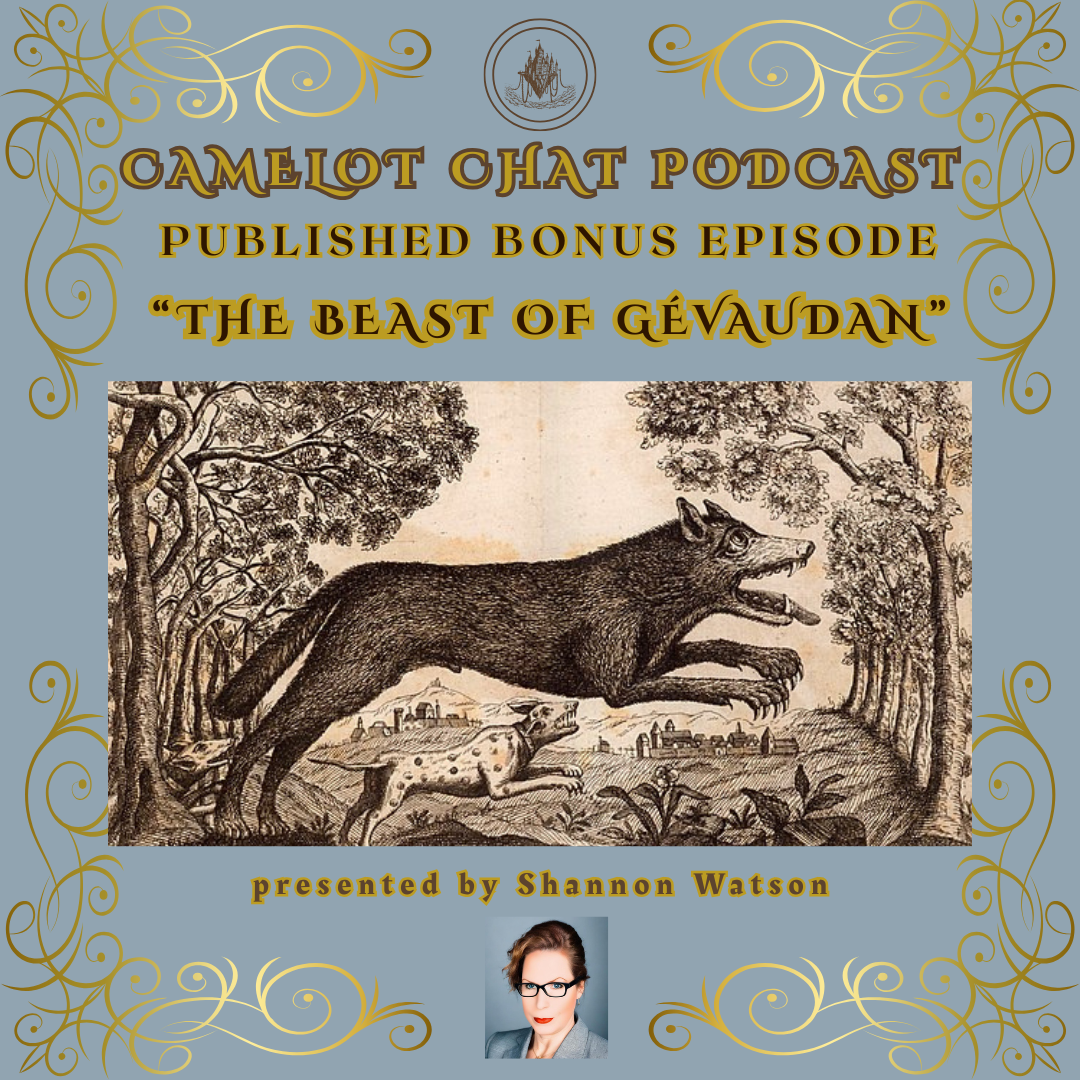
Tales of the Beast of Gévaudan
… One spectacular example of a medieval "werewolf scare" is that of the Beast of Gévaudan. In 1765, Louis XV sent troops to kill a rumored loup-garou that was terrorizing France.
The story goes that, in 1764, reports from southwestern France began drifting north into the royal court of King Louis the XV. Reports of anywhere from 60 to over 200 deaths. Specifically, deaths by animal attack. Victims partially eaten. Victims with their throats ripped out. A most persistent animal, who attacked in daylight and often, in village centers.
But no one could identify the beast…
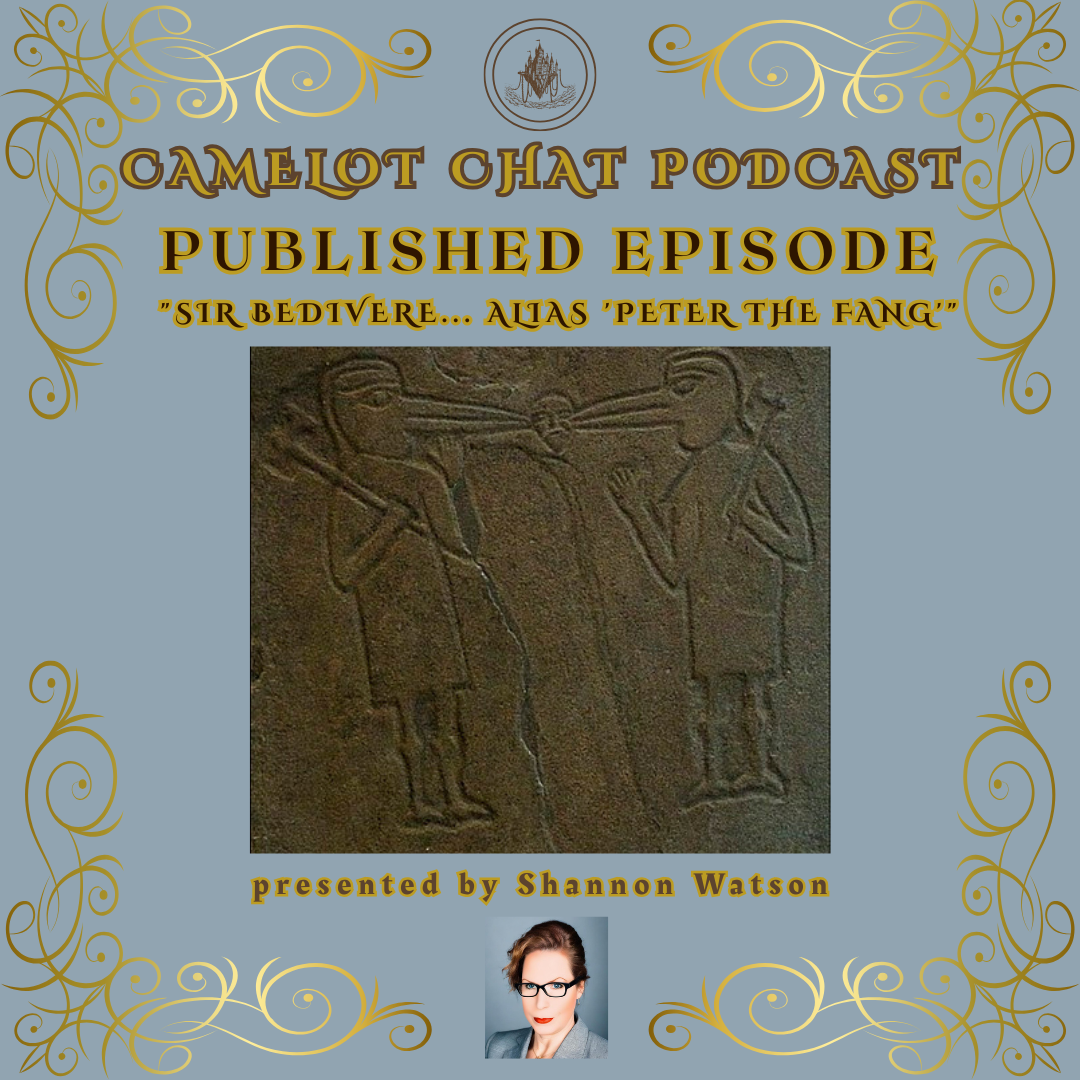
Sir Bedivere… Alias “Peter the Fang”
THE WOLF OF ANSBACH:
In a reported werewolf attack of the late seventeenth century, the Wolf of Ansbach slaughtered a number of people, beginning with livestock, and progressing to children. The late, unlamented leader of Ansbach had recently died, and the citizens believed the animal was actually a reincarnated version of him in werewolf form.
So, the townspeople held a wolf hunt. Replete with hounds and hoes and spears and pitchforks and all the usual accoutrements.
Driving the wolf from the woods, they chased it down with dogs. It leapt into an uncovered well. And after that, well, it was a turkey shoot…

Berserkers: Revisiting Michael Crichton’s “Eaters of the Dead”
… Maybe Sir Bedivere wasn't so “courtly,” after all? The “knights” in King Arthur’s Court actually originated from a much earlier, much “darker” time and place. Theirs was not the fairy castle with gilded towers, swans floating by in the dark blue moat below. No steel-clad soldiers in shining armor, here.
Arthur’s knights were much likelier to have been barbaric warriors along the lines of Braveheart. Some still used clubs: a weapon straight out of the Stone Age. Their fortresses would have matched up well, too, with Braveheart’s forts: small, wooden, and bristling with spikes called peels. The Roman castles in the fifth century were falling into ruin, and no one had enough men to man all of them anyway. But the frontier hillforts, the province of small, local chieftains, survived. At least, for a while.
So, rather than the handsome Sir Bedivere of French romance, we are confronted with a savage man, probably part-Pictish, who fought like a demon in battle and, as a consequence, was left with only one arm…

Bedrydant, Better Known as “Peter the Fang”
… The Arthurian knight known as Sir Bedivere was also called Bedwyr and Bedrydant. So many names! But was any of them Bedivere’s real name?
The short answer is, “Probably not.”
For the longer answer, keep listening…
Sir Bedivere the Cupbearer
… Sir Bedivere was King Arthur’s cupbearer. Evidence of cupbearers serving at medieval courts survives from ancient times. They are there in the Old Testament, when Solomon met Sheba. They are there in the Iliad, pouring ambrosia into golden goblets for the gods on Mount Olympus. They were there in ancient Egypt, standing beside the Pharoah in a gold-glimmering throne room.
There is even a report, roughly contemporary with Arthur, of a “Count of the Cupbearers,” serving in Visigothic Spain. This meant there was literally a corps of cupbearers with a nobleman at their head, who served as Chief Cupbearer. The other cupbearers would have waited on the king's royal guests.
It is likely that this arrangement, with Bedivere as Chief Cupbearer, is what would have obtained in King Arthur’s court…
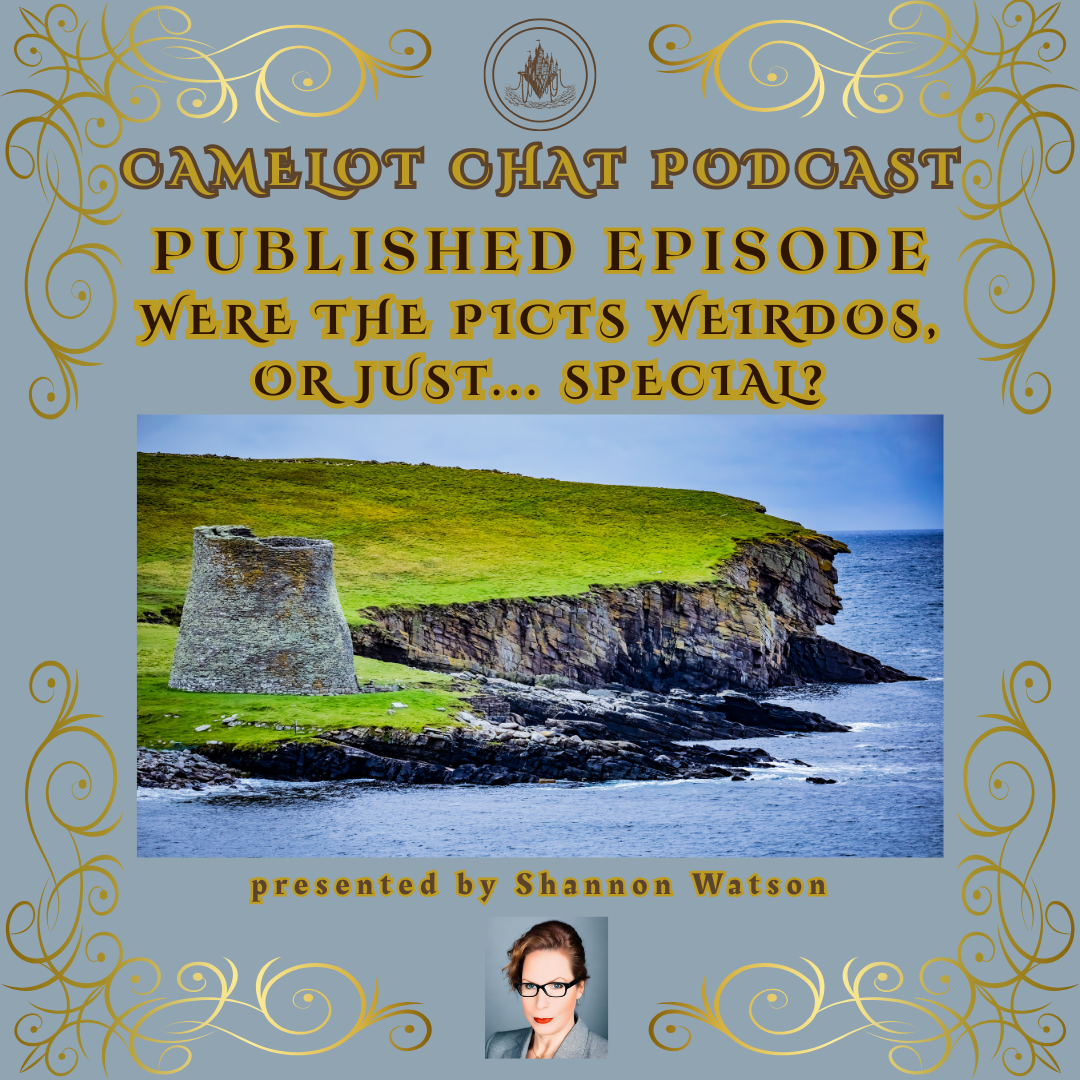
Were the Picts Weirdos, or Just… Special?
Hello, everyone, and welcome to Camelot Chat! I’m your hostess, Shannon Watson; and today, we will be discussing whether the Picts were “Weirdos, or Just… Special?”
The Picts had a quantity of weird practices. Or at least, practices that appear strange in retrospect and to the modern eye.
Some of these customs were, frankly, pretty neat, like the straight-out-of-a-faerie-tale-looking Pictish brochs: high, stone round towers of which Rapunzel would have been proud. The Pictish broch was the skyscraper of its Dark Age day. Brochs are scattered throughout the Scottish landscape, and the Arthurian villain, Meleagant, built just such a tower in which to imprison Lancelot, whom he had ambushed in a most un-chivalric manner…

Picti and Pixies and Dwarves… Oh, My!
Hello, everyone, and welcome to Camelot Chat! I’m your hostess, Shannon Watson; and today, we will be talking about the mysterious Picts of ancient Scotland… and the fairy-tale characters that evolved from Pictish legend. This episode is therefore playfully entitled, Picti and Pixies and Dwarves… Oh, My!
The Picts were a group of natives who inhabited early Scotland, both before the Romans conquered most of southern Britannia, and after 410 AD, when the Briton landholders kicked out the remaining Roman administration. After that, Rome never returned to Britain…
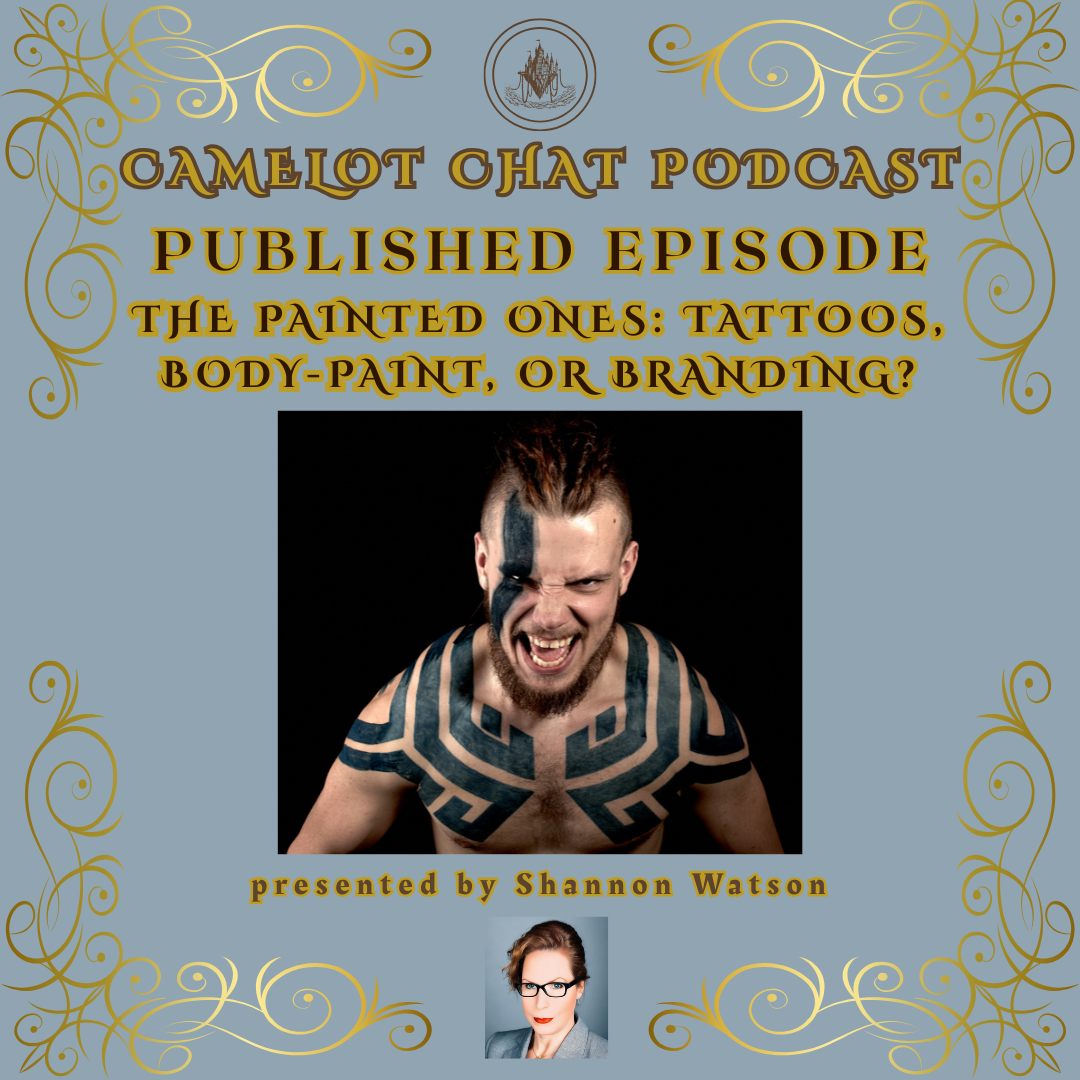
The Painted Ones: Tattoos, Body-Paint, or Branding?
Hello, everyone, and welcome to Camelot Chat! I’m your hostess, Shannon Watson, and today’s episode is The Painted Ones: Tattoos, Body-Paint, or Branding?
Incidentally, this one’s for all you fans of Antoine Fuqua’s 2004 film, King Arthur! Because today, we will be talking tattoos… Pictish tattoos, that is.
Pictish people–certainly the warriors, but possibly also the women–were recorded by ancient writers as having been covered in some sort of strange designs. Blue and green and possibly multi-colored markings. A type of ancient inky graffiti that might, just possibly, have been… tattoos.

Guinevere: Not Such a Ninny After All
Hello, everyone, and welcome to Camelot Chat! I’m your hostess, Shannon Watson; and today, we will be continuing our discussion from last week about Queen Guinevere... except, this week, we will be talking about Guinevere’s secular totems and what they tell us about her function as queen.
Last week, we mentioned the Cult of the Severed Head, and how Guinevere rode about with the embalmed severed heads of her enemies swaying from the pommel of her saddle. So: either the queen or someone in her entourage was a headhunter: one of the ancient caste of warriors who took the heads of their enemies in battle and preserved them, thereby keeping their power…

Queen Guinevere: Medusa, Blood-letting, and the Cult of the Severed Head
Hello, everyone, and welcome to Camelot Chat! I’m your hostess, Shannon Watson, and today, we’ll be talking about Queen Guinevere... and whether queen was really her only title.
Many strange symbols and stories are associated with the queen known as Guinevere, Gwenhwyfar, Guanhumara... and even Wanders. George R.R. Martin, author of The Song of Ice and Fire series, calls these symbols sigils; and most of the great houses in his books, some of which were based on medieval chivalry, have them.
The people of Dark Age Britain had them, too, although the forms their sigils took were more primitive, being more on the line of totems than heraldry. For instance, instead of a picture of a running wolf on a flying pennant, one might see a feral-looking warrior wearing a wolf pelt. Or, a heavily-tattooed Pict of the Orcs, or Boar Clan, might use the tusk of a wild boar in lieu of a dagger…
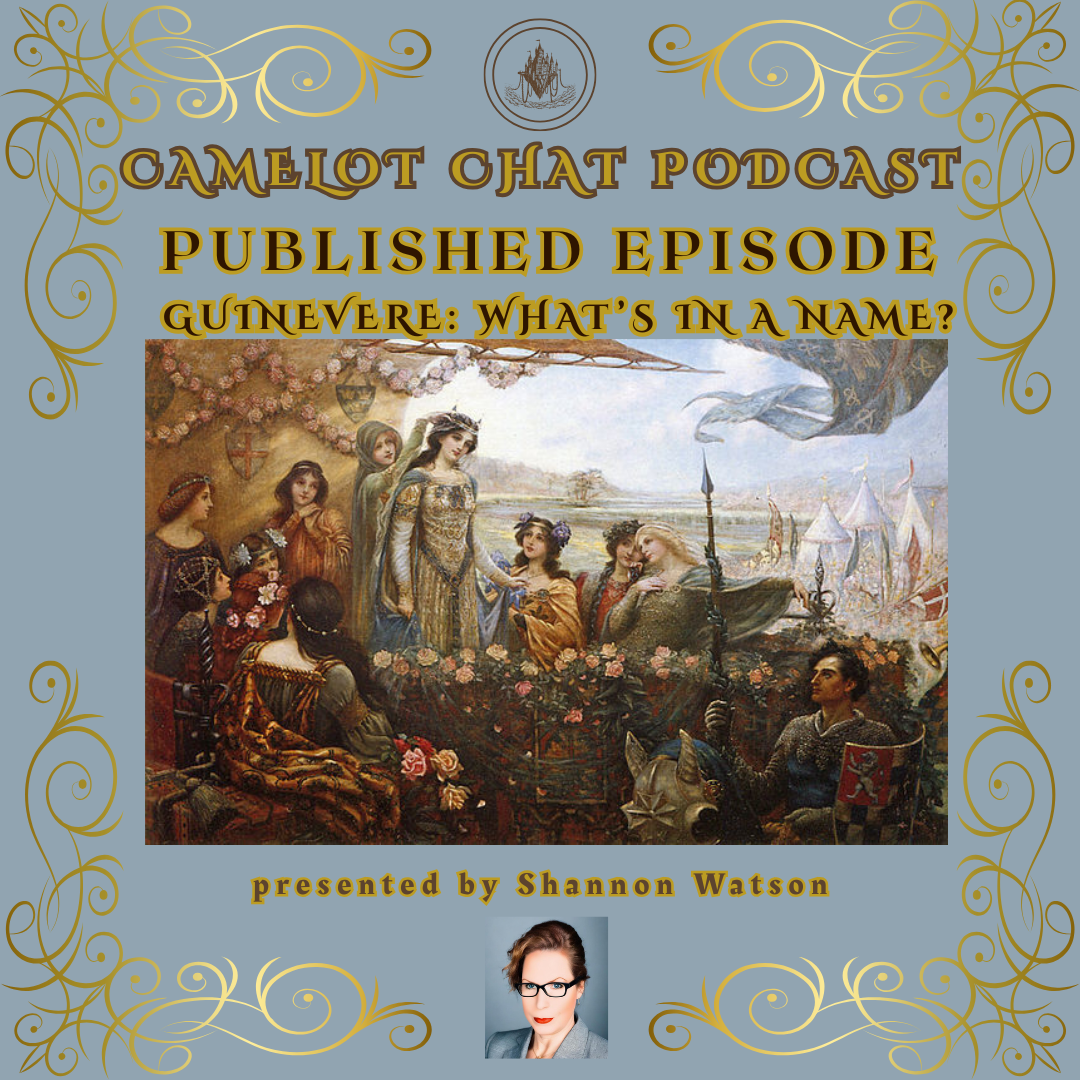
Guinevere: What's in a Name?
Hello, everyone, and welcome to Camelot Chat! I’m your hostess, Shannon Watson, and today, we’ll be talking about the many names–their translations, in what languages they originated, and what that all means–of the famous Queen Guinevere of Camelot.
Queen Guinevere had a lot of names. I mean a lot.
Let’s start with the obvious. Guinevere. What does it mean, and where does it come from? What was the original form? And was it even a name at all…?
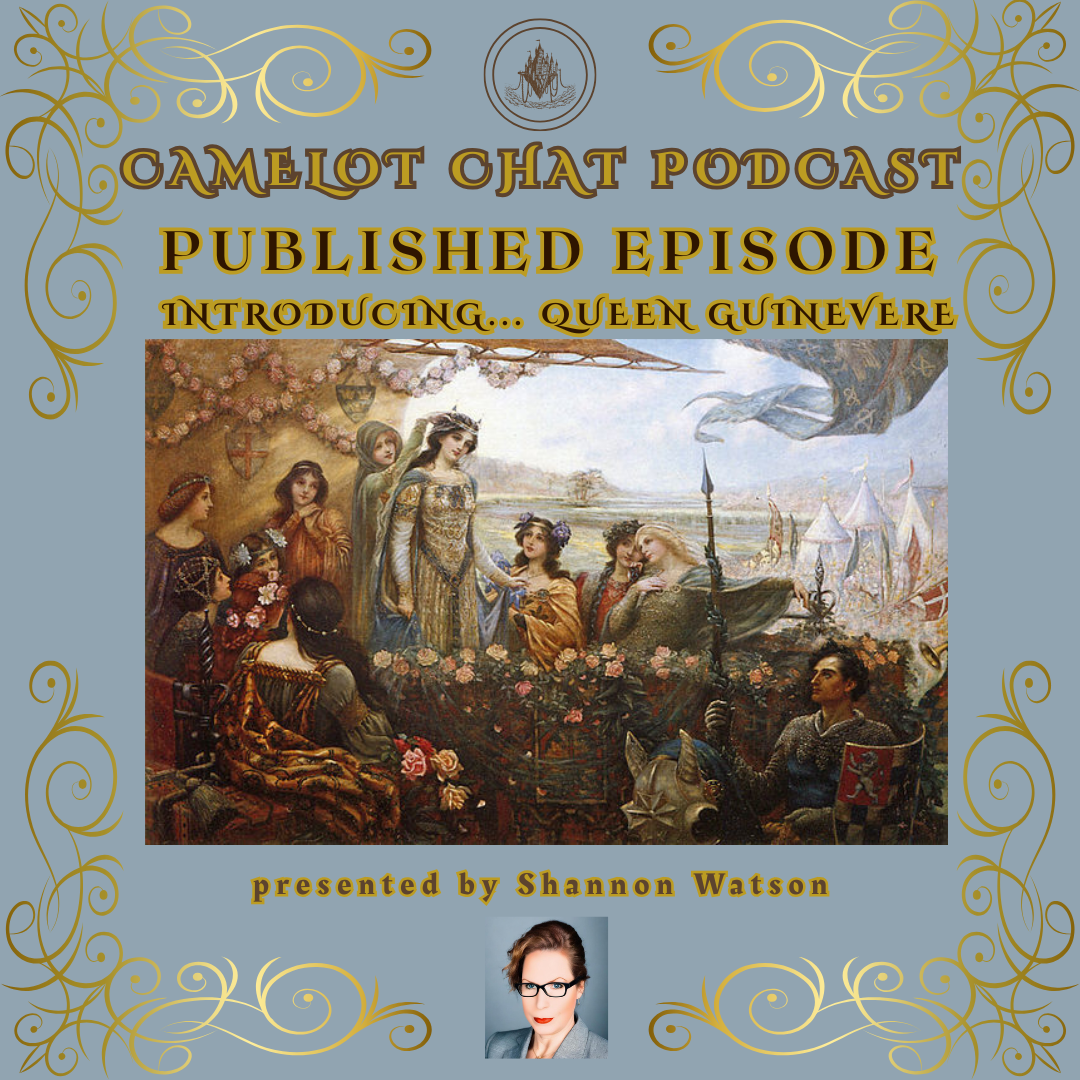
Introducing... Queen Guinevere
Hello, everyone, and welcome to the first-ever episode of my new weekly podcast, Camelot Chat! I’m your hostess, Shannon Watson, and today, we’ll be talking about the early origins of Queen Guinevere of Arthurian legend.
First, I’ll give you a little background on myself. Since 1990, I have been researching the history behind the Arthurian legends. Using multiple disciplines–etymology, the study of language; history, literature, archaeology, geology, theology, military history, geography, and more–I have compiled extensive knowledge of the not-so-dark period known as the Dark Ages, or Early Middle Ages…